Cotopaxi Allpa 35L vs. Lo & Sons "The Hakuba"
Two carry-on travel backpacks, compared spec for spec.
Cotopaxi Allpa 35L
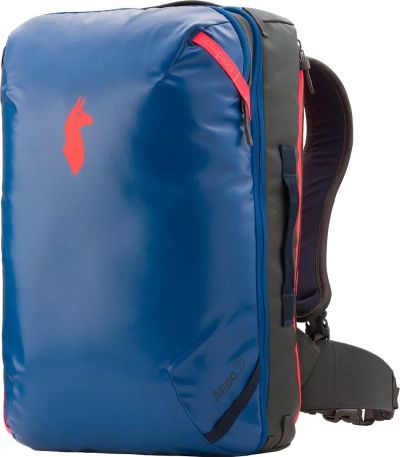
| Capacity | 35 L |
| Weight | 1.3 kg |
| Dimensions | 56×30×25 cm |
| Airline fit | 26% |
| Price | $225 |
Feature by feature
| Cotopaxi Allpa 35L | Feature | Lo & Sons "The Hakuba" |
|---|---|---|
| Storage | ||
| N | Compression | N |
| None | Expanded Capacity | None |
| 1 | Opening | 4 |
| front | Passport | Y |
| Y | Passthrough | N |
| Carry | ||
| hideable | Backpack | Y |
| hideable | Hip Belt | N |
| Y | Sternum Strap | N |
| Inside | ||
| 15in | Laptop | 15in |
| 3 | Main Compartments | 0 |
| Y | Organizer | |
| Outside | ||
| × | Hard Shell | × |
| N | Rain-fly | N |
| 1, side | Water Bottle Holder | 2 |
| Y | Water Resistant | Y |
| Material | |
| 100% recycled 840D TPU-coated nylon | Recycled Poly |
Lo & Sons "The Hakuba"
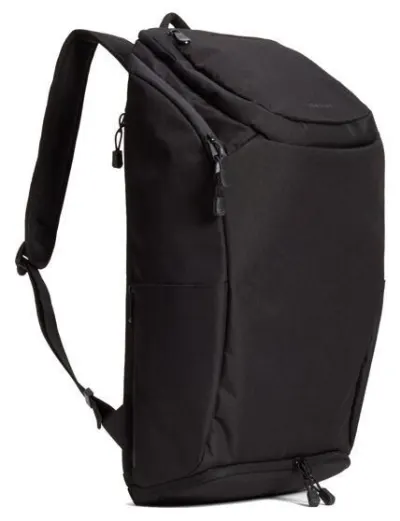
| Capacity | 35.5 L |
| Weight | 1.1 kg |
| Dimensions | 56×34×21 cm |
| Airline fit | 47% |
| Price | $165 |
Right off the bat, you can't ignore the difference in size between the two packs: the Cotopaxi Allpa 35L comes in at 20x30x51 inches, whereas the Lo & Sons "The Hakuba" is slightly bigger, sizing up at 21x34x56 inches. This difference in dimensions affects storage capacity. The Allpa boasts a substantial 35-liter capacity, perfect for the weekend warrior or minimalist traveler, while the Hakuba offers a slightly larger storage room at 35.5 liters. Your choice between the two comes down to how much "just-in-case" space you like to have on your travels.
When it comes to weight, the Hakuba edges out the Allpa. Weighing in at only 1.1 pounds, it's lighter than the 1.5-pound Allpa. So if you plan on filling your pack to the brim or covering long distances, those 0.4 pounds could make a significant difference.
- Size: Cotopaxi Allpa 35L (20x30x51 inches) vs. Lo & Sons "The Hakuba" (21x34x56 inches)
- Capacity: Cotopaxi Allpa 35L (35 liters) vs. Lo & Sons "The Hakuba" (35.5 liters)
- Weight: Cotopaxi Allpa 35L (1.5 pounds) vs. Lo & Sons "The Hakuba" (1.1 pounds)
- Material: Cotopaxi Allpa 35L (1680D ballistic nylon paneling) vs. Lo & Sons "The Hakuba" (Recycled Poly)
- Airline Compatibility: Cotopaxi Allpa 35L (80% of airlines) vs. Lo & Sons "The Hakuba" (97% of airlines)
Materials used in the construction of the bags are another factor to consider. Cotopaxi opted for the sturdiness of 1680D ballistic nylon paneling in the Allpa 35L, a choice that would appeal to those planning on rough adventures where durability counts. In contrast, Lo & Sons went the environmentally friendly route with the Hakuba, which is made from Recycled Poly.
Finally, when it comes to airline compatibility, the Hakuba outshines the Allpa. It is compatible with an impressive 97% of airlines, compared to the Allpa's 80%. Given the uncertainties that often accompany air travel, knowing that your backpack will likely meet the carry-on requirements of almost any airline you choose brings a level of comfort that shouldn't be understated. All in all, both bags have their strengths - it's all a matter of personal preference.