Bellroy Classic Backpack Plus vs. Dakine Gemini
Two carry-on travel backpacks, compared spec for spec.
Bellroy Classic Backpack Plus

| Capacity | 22 L |
| Weight | 1 kg |
| Dimensions | 52×30×21 cm |
| Airline fit | 71% |
| Price | $179 |
Feature by feature
| Bellroy Classic Backpack Plus | Feature | Dakine Gemini |
|---|---|---|
| Storage | ||
| N | Compression | N |
| None | Expanded Capacity | None |
| 4 | Opening | 0 |
| Y | Passport | top |
| N | Passthrough | N |
| Carry | ||
| Y | Backpack | Y |
| N | Hip Belt | N |
| N | Sternum Strap | Y |
| Inside | ||
| 15in | Laptop | 17in |
| 1 | Main Compartments | 2 |
| N | Organizer | N |
| Outside | ||
| × | Hard Shell | × |
| N | Rain-fly | N |
| N | Water Bottle Holder | 1, side |
| Y | Water Resistant | Y |
| Material | |
| Venture-weave polyester and leather | 600D Polyester |
Dakine Gemini
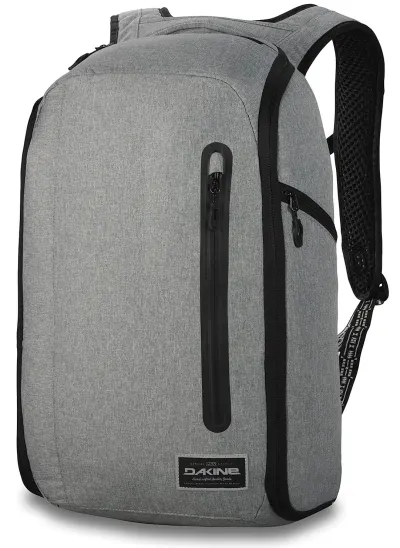
| Capacity | 28 L |
| Weight | 1 kg |
| Dimensions | 56×34×24 cm |
| Airline fit | 26% |
| Price | $125 |
Key differences between the Bellroy Classic Backpack Plus and Dakine Gemini
- Opening: Top zip on the Bellroy Classic Backpack Plus; Other on the Dakine Gemini.
- Passport pocket: Yes on the Bellroy Classic Backpack Plus; Top on the Dakine Gemini.
- Sternum strap: No on the Bellroy Classic Backpack Plus; Yes on the Dakine Gemini.
- Laptop sleeve: 15in on the Bellroy Classic Backpack Plus; 17in on the Dakine Gemini.
- Main compartments: 1 on the Bellroy Classic Backpack Plus; 2 on the Dakine Gemini.
- Water bottle pockets: No on the Bellroy Classic Backpack Plus; 1, side on the Dakine Gemini.
Both have: backpack straps, water resistant.
Which airlines take each bag as a carry-on
We checked both bags against the carry-on size limits of 189 airlines. 49 accept both. 85 accept only the Bellroy Classic Backpack Plus, and 0 accept only the Dakine Gemini.
Only the Bellroy Classic Backpack Plus fits
Aer Lingus, Aeroflot, Aerolineas Argentinas, Aeromexico, Air Asia, Air Canada, Air Caraibes, Air France, Air India, Air Macau, Air Mauritius, Air Wisconsin, AirAsiaX, Alaska Airlines, All Nipon Airways, Allegiant Air, American Airlines, ANA, Austrian, Avianca , Azerbaijan Airlines, Bahamasair, Bangkok Airways, Biman Bangladesh, Boliviana de Aviacion, Brussels Airlines, Cambodia Angkor Air, Cathay Pacific, Cayman Airways, Cebu Pacific, China Airlines, CommutAir, Croatia Air, Czech Airlines, Delta Airlines, Dragonair, Ethiopian Airlines, Eurowings, EVA Air, Fiji Airways, Flair Air, Garuda Indonesia, Gol Linhas Aereas, Hawaiian Airlines, Hong Kong Airlines, Iberia, Indigo, Interjet, Iran Air, Japan Airlines, Jet Airways, jetBlue Airways, Jetstar Airways, Jetstar Asia, Kenya Airways, KLM, Kulula, LATAM , Liat Airlines, LOT Polish, Lufthansa, Mahan Air, Malaysia Airlines, Mango, Mesa Airlines, Norwegian, Pakistan International, Peach, Porter Airlines, Qantas Airways, Republic Airways, SAS Scandinavian, Scoot, Sky Airlines, Skywest, Inc., South African Airways, SriLankan Airlines, Swiss Int'l Air Lines, Tiger Airways, Trans States, Turkish Airlines, United Airlines, Vietnam Airlines, Virgin Atlantic, WestJet.
The Bellroy Classic Backpack Plus and the Dakine Gemini are both well-constructed, versatile backpacks, each with its unique strengths. The Bellroy is slightly smaller, yet none-the-less efficient, offering 21 inches of height, 30 inches in width, and 52 inches deep. It's a lightweight pack at just 1 pound and sports a notable capacity of 22 liters. Worth mentioning is the quality of its construction; venture-weave polyester and leather combine to create a sturdy, long-lasting carry-on, capable of holding a laptop of up to 15 inches. Reviewers praise it for its "clean aesthetic" and "excellent build and materials," making it a practical and stylish choice for daily use.
Meanwhile, the Dakine Gemini is taller and wider with dimensions of 56 by 34 by 24 inches, gaining points for its better compatibility with airlines' regulations. It's just as lightweight, like its counterpart, but packs a punch with an increased capacity of 28 liters. Materials-wise, it boasts robust 600D Polyester construction, and its laptop compartment can securely stow a larger laptop–up to 17 inches.
- Size: Dakine Gemini (56"x34"x24") is taller and wider than the Bellroy Classic Backpack Plus (21"x30"x52").
- Weight: Both are equivalently lightweight at 1 pound.
- Capacity: Dakine Gemini wins with 28 liters against Bellroy's 22 liters.
- Airlines Compatibility: Another win for Dakine Gemini at 92% versus Bellroy’s 65%.
- Materials: The Bellroy mixes Venture-weave polyester and leather, while the Dakine uses a sturdy 600D Polyester.
- Laptop Storage: Dakine accommodates larger laptops (up to 17”) against Bellroy’s 15” max capacity.
The Bellroy Classic Backpack Plus has been noted for its great craftsmanship and use of excellent materials. Its sleek, minimalistic yet stylish design fits most environments perfectly, making it a versatile choice for every day carry. Furthermore, it keeps things neatly in place during travel thanks to its organizational features. On the other hand, the Dakine Gemini flaunts impressive airline compatibility and a touch more room - a key characteristic for those on the go. Ultimately, both offer unique virtues and would be a quality addition to any traveler’s luggage ensemble, bearing in mind the trade-off between organization and space.