Simond MT500 Air 50+10L Backpacking vs. Osprey Kestrel 48
Two carry-on travel backpacks, compared spec for spec.
Simond MT500 Air 50+10L Backpacking
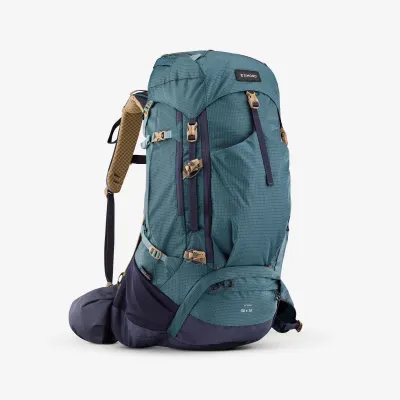
| Capacity | 60 L |
| Weight | 1.7 kg |
| Dimensions | 65×35×35 cm |
| Airline fit | 1% |
| Price | $170 |
Feature by feature
| Simond MT500 Air 50+10L Backpacking | Feature | Osprey Kestrel 48 |
|---|---|---|
| Storage | ||
| >5 | Compression | 6 |
| None | Expanded Capacity | None |
| 0 | Opening | 0 |
| top | Passport | top |
| N | Passthrough | N |
| Carry | ||
| Y | Backpack | Y |
| Y | Hip Belt | Y |
| Y | Sternum Strap | Y |
| Inside | ||
| N | Laptop | N |
| 4 | Main Compartments | 4 |
| N | Organizer | N |
| Outside | ||
| × | Hard Shell | × |
| N | Rain-fly | Y |
| 2, side | Water Bottle Holder | 2, side |
| Y | Water Resistant | Y |
| Material | |
| 210D Rip stop nylon | ecycled 420D nylon, DWR treatments made without PFAS |
Key differences between the Simond MT500 Air 50+10L Backpacking and Osprey Kestrel 48
- Compression straps: >5 on the Simond MT500 Air 50+10L Backpacking; 6 on the Osprey Kestrel 48.
- Rain cover: No on the Simond MT500 Air 50+10L Backpacking; Yes on the Osprey Kestrel 48.
Both have: passport pocket, backpack straps, hip belt, sternum strap, water bottle pockets, water resistant.
Which airlines take each bag as a carry-on
We checked both bags against the carry-on size limits of 189 airlines. 1 accept both. Every airline that takes one takes the other.
Simond MT500 Air 50+10L Backpacking vs. Osprey Kestrel 48: which should you pack?
The Simond MT500 Air 50+10L Backpacking carries 12L more than the Osprey Kestrel 48 (60L vs. 48L), while the Simond MT500 Air 50+10L Backpacking is the lighter pack at 1.7kg (vs. 2kg). For carry-on flexibility, the Simond MT500 Air 50+10L Backpacking fits 1% of the airlines we track — the higher of the two. If you prioritise packing volume, choose the Simond MT500 Air 50+10L Backpacking; if you want to travel lighter, the Simond MT500 Air 50+10L Backpacking is the better call.