Osprey Porter 46 vs. Exped Core 35
Two carry-on travel backpacks, compared spec for spec.
Feature by feature
| Osprey Porter 46 | Feature | Exped Core 35 |
|---|---|---|
| Storage | ||
| 2 | Compression | N |
| None | Expanded Capacity | None |
| 1 | Opening | 3 |
| top | Passport | N |
| Y | Passthrough | N |
| Carry | ||
| hideable | Backpack | Y |
| hideable | Hip Belt | removable |
| Y | Sternum Strap | Y |
| Inside | ||
| 16in | Laptop | N |
| 4 | Main Compartments | 1 |
| Y | Organizer | N |
| Outside | ||
| × | Hard Shell | × |
| N | Rain-fly | N |
| N | Water Bottle Holder | N |
| Y | Water Resistant | Y |
| Material | |
| bluesign®-approved Recycled 500D Nylon Packcloth PFC Free DWR | 1680 D Ballistic nylon, PU coated, 1'500 mm water column |
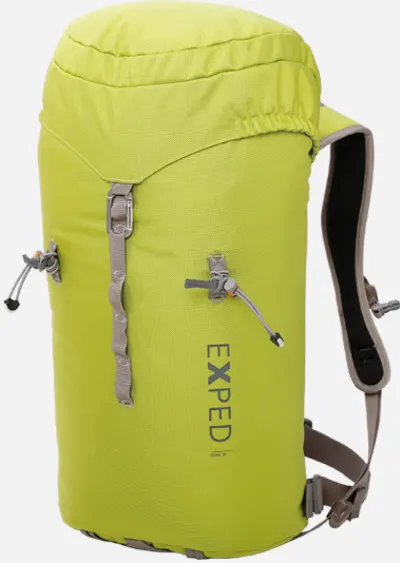
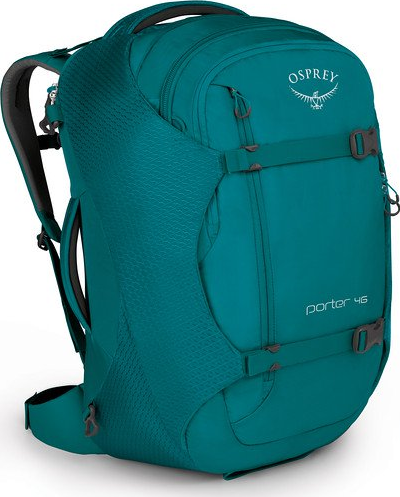
The Osprey Porter 46 and the Exped Core 35 backpacks are both strong contenders when it comes to choosing a reliable, spacious backpack for carrying on planes. Avoiding extra check-in baggage fees becomes all the more possible with these packs. The Porter 46 from Osprey, true to its name, offers ample space with a 46-liter capacity, in addition to the well-thought-out placements of compartments and pockets. The Exped Core 35, on the other hand, takes pride in a more streamlined size yet retaining distinct durability and weather-resistance.
- The Osprey Porter 46 is larger with a size of 23 x 36 x 56 inches and a weight of 1.5 pounds, while the more compact Exped Core 35 measures at 23 x 30 x 62 inches and a featherweight of 0.1 pounds.
- The Porter 46 presents a generous 46-liter capacity, compared to the Core 35’s 35-liter limit.
- However, the Exped Core 35 outshines its competitor with an 89% compatibility with airlines, while the Osprey Porter 46 rises to about half, 47%.
- Both backpacks are constructed with lasting durability – the Porter 46 in Nylon, and the Core 35 in 1680 D Ballistic nylon with a PU coating and a 1,500 mm water column.
- The Porter can accommodate a 1-inch laptop whereas the Core does not possess such a compartment.
The Osprey Porter 46 is often praised for its roomy interior and rugged durability that can brave all kinds of travel conditions. Notable features include its good suspension system, sizable packing space, clamshell opening for easy access, and compression straps that mitigate any sloppy appearance. Ultimately, it’s very comfortable to handle on top of its solid, urban traveler-friendly construction.
The Exped Core 35, although having a smaller size, doesn't cut corners when it comes to functionality. Apart from its noteworthy lightweightness, it offers a storm-proof build that withstands heavy use. The plethora of attachment loops makes it a versatile choice for fulfilling outdoor activity needs. Hence, despite the two backpacks’ respective strengths, the selection ultimately comes down to personal preference in terms of size, functionality, and compatibility with your travel needs.