Osprey Porter 46 vs. Deuter Freerider 28 SL
Two carry-on travel backpacks, compared spec for spec.
Feature by feature
| Osprey Porter 46 | Feature | Deuter Freerider 28 SL |
|---|---|---|
| Storage | ||
| 2 | Compression | Y |
| None | Expanded Capacity | None |
| 1 | Opening | 4 |
| top | Passport | N |
| Y | Passthrough | N |
| Carry | ||
| hideable | Backpack | Y |
| hideable | Hip Belt | Y |
| Y | Sternum Strap | Y |
| Inside | ||
| 16in | Laptop | N |
| 4 | Main Compartments | 1 |
| Y | Organizer | Y |
| Outside | ||
| × | Hard Shell | × |
| N | Rain-fly | N |
| N | Water Bottle Holder | N |
| Y | Water Resistant | Y |
| Material | |
| bluesign®-approved Recycled 500D Nylon Packcloth PFC Free DWR | 330D PA 6.6 Ripstop, 210D PA Ripstop |
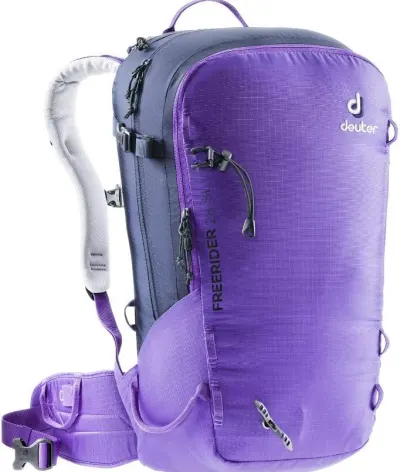
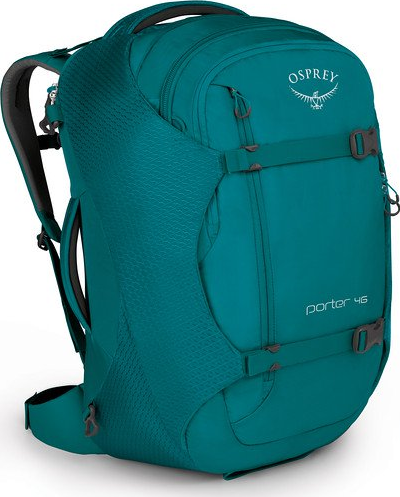
When it comes to travel backpacks, two options stand out: the Osprey Porter 46 by Osprey and the Deuter Freerider 28 SL by Deuter. Each one garners glowing first-hand reviews from seasoned travelers, although they boast distinct features. Let's delve into the details to assess the worthiness of these packs for your future adventures.
The Osprey Porter 46, as the name suggests, offers substantial storage, with its 46 liters of capacity. This means you have room for the gears and knick-knacks that matter. It might be a bit bulky (23 inches tall, 36 inches wide, and 56 inches deep), but the payoff is the organizational prowess this pack offers. Weighing 1.5 pounds, it's a marvel that this pack manages to be relatively lightweight amidst its features, such as a roomy laptop compartment. One reviewer aptly describes it as a “big pack with a big capacity,” framing the Porter 46 as a formidable choice for those who fancy space.
On the other hand, the Deuter Freerider 28 SL is smaller in size (18 inches tall, 34 inches wide, and 52 inches deep) yet it carries its own weight. While it only allows for 28 liters of packing space, its compatibility with 79% of airlines presents an appealing option for the frequent flyer. The reduced weight of 0.98 pounds sets it far ahead in terms of portability. Its standout feature, though, is its material: 330D PA 6.6 Ripstop, 210D PA Ripstop. This speaks to the durability of the pack, an essential aspect for a carry-on backpack.
Here's a snapshot comparing these two packs:
- The Osprey Porter 46 is larger, heavier, has more capacity, but is less airline-friendly.
- The Deuter Freerider 28 SL is smaller, lighter, has less capacity, but is more compatible with airlines.
- Both have laptop compartments, but only the Porter 46 can accommodate a sizable laptop.
- The Porter 46 is made of sturdy Nylon, while the Freerider 28 SL boasts of being made from a ripstop fabric.
Remarkably, the Porter 46 garners praise for its compression straps, clamshell opening, and good suspension. Plus, its durability ensures it withstands urban traveling. “A lot of smart features,” one reviewer noted. As for the Freerider 28 SL, the SL carry system is tailored for women's body sizes, a distinct feature not often observed among commonplace backpacks. In the end, one's choice boils down to personal needs and preferences. If you value space, go for Porter 46. If you're after a lightweight, durable, and more travel-friendly pack, choose the Freerider 28 SL. Either way, both are noteworthy choices.