Osprey Porter 46 vs. Macpac Rapaki 25
Two carry-on travel backpacks, compared spec for spec.
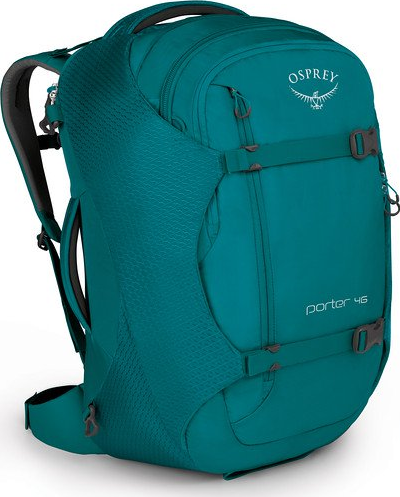
Feature by feature
| Osprey Porter 46 | Feature | Macpac Rapaki 25 |
|---|---|---|
| Storage | ||
| 2 | Compression | |
| None | Expanded Capacity | None |
| 1 | Opening | 4 |
| top | Passport | N |
| Y | Passthrough | N |
| Carry | ||
| hideable | Backpack | Y |
| hideable | Hip Belt | removable |
| Y | Sternum Strap | Y |
| Inside | ||
| 16in | Laptop | 15in |
| 4 | Main Compartments | 1 |
| Y | Organizer | N |
| Outside | ||
| × | Hard Shell | × |
| N | Rain-fly | N |
| N | Water Bottle Holder | 2 |
| Y | Water Resistant | Y |
| Material | |
| bluesign®-approved Recycled 500D Nylon Packcloth PFC Free DWR | 200D Recycled Polyester, 420D Oxford Nylon |
Macpac Rapaki 25
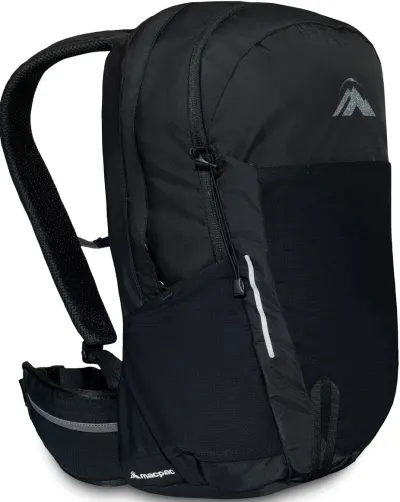
| Capacity | 25 L |
| Weight | 0.91 kg |
| Dimensions | 52×30×25 cm |
| Airline fit | 39% |
| Price | $140 |
Taking a look at the Osprey Porter 46 and the Macpac Rapaki 25, both carry on backpacks are distinctively high-quality. First off, the Osprey Porter 46 stands tall at 23 inches, while the Macpac Rapaki 25 measures slightly taller at 25 inches. While the Porter holds a gracious offering of 46 liters, the Rapaki offers a more modest 25 liters. This generous discrepancy in size is echoed in the Porter's weight - a solid 1.5 pounds against the Rapaki's featherweight 0.91 pounds.
The materials for both backpacks are robust. The Porter prefers nylon, which is known for its tough, wear-resistant characteristics. On the other hand, the Rapaki boasts a blend of recycled polyester and Oxford nylon. This combination suggests a more eco-friendly backpack that doesn’t skimp on quality. To top it off, both backpacks are compatible with roughly the same amount of airlines - about 47%.
-
Osprey Porter 46:
- 23 inches tall
- 36 inches wide
- 56 inches deep
- Weighs 1.5 pounds
- 46 liters capacity
- Made of Nylon
- Laptop compartment fit for a 1 inch laptop
-
Macpac Rapaki 25:
- 25 inches tall
- 30 inches wide
- 52 inches deep
- Weighs 0.91 pounds
- 25 liters capacity
- Made of 200D Recycled Polyester, 420D Oxford Nylon
- Laptop compartment fit for a 15 inch laptop
Reviewers heap praise on the Porter, focusing on its ample size, durability and organization. The Porter seems ideal for more substantial loads given its spaciousness and rapid pack and unpack capability with the clamshell opening. Also, it stays looking neat with its compression strap, even when puffed to full capacity. Contrarily, reviewers remain tight-lipped for now about the Rapaki, placing it at a slight disadvantage in consumer preference.
Finally, the selling point for the Porter isn't just about being a roomy, durable gear-bearer. It also has excellent suspension and despite being ample, is rather lightweight for its size. Trust that your things will be secure and easily accessible. As for the Rapaki, the potentials are still up in the air. However, its lean physique and peculiar combination of eco-friendly materials might be its ace. Consider your needs, your lifestyle, and how you'll use each backpack when deciding between the two. Either way, you're looking at a good investment.